Clinical informatics consulting for health systems is the discipline that bridges the gap between the technology you have deployed and the clinical reality your staff lives in every day. If your EHR went live months or years ago and your physicians, nurses, and care teams are still fighting the system instead of using it — the problem is not the technology. The problem is workflow alignment, and it requires a clinical informatics expert to fix it.
Across the United States, health systems are spending millions on EHR platforms and still watching clinician satisfaction scores fall, documentation time climb, and burnout rates rise. The EHR is not the enemy. A misconfigured, poorly aligned EHR is. Clinical informatics consulting exists to close that gap — systematically, measurably, and permanently.
Zaamaa Consulting provides specialized clinical informatics consulting for health systems of all sizes — from community hospitals to large academic medical centers. If your clinical team is spending more time documenting than caring for patients, this post is for you.
The Problem Clinical Informatics Consulting Solves
Before we talk about what clinical informatics consultants do, let’s talk about what your clinical leaders are likely experiencing right now. These are the symptoms that bring health systems to the table:
- Physicians spending 2+ hours on documentation for every 1 hour of patient care. This ratio is not acceptable — and it is not inevitable. It is a workflow design problem.
- Nurses working around the EHR instead of through it. Sticky notes, verbal handoffs, and shadow systems emerge when the EHR does not match how nursing workflows actually operate on the floor.
- Alert fatigue driving dangerous override behavior. When clinical decision support tools generate so many alerts that clinicians click through them without reading, the safety net becomes a hazard.
- Low physician adoption of EHR features built specifically to help them. Tools that nobody uses are tools that nobody trusts — usually because they were built without adequate clinical input during the design phase.
- Clinician burnout directly attributed to EHR frustration. This is not anecdotal. It is one of the most documented and consistent findings in healthcare workforce research over the past decade.
The American Medical Association has found that EHR-related burden is one of the leading contributors to physician burnout. Fixing it requires clinical informatics expertise, not just IT support.
Every one of these problems has a root cause that clinical informatics consulting for health systems is specifically designed to diagnose and resolve. The fix is not a software upgrade. It is a structured process of workflow analysis, EHR optimization, and clinical engagement — led by someone who understands both the clinical environment and the technology.
What Clinical Informatics Consulting Actually Does
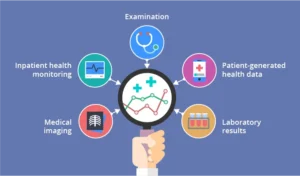
Clinical informatics is the applied science of using data, technology, and workflow design to improve how healthcare is delivered. Clinical informatics consulting for health systems takes that discipline and puts it to work on the specific, real-world problems your organization is experiencing right now.
Here is what that looks like in practice:
Workflow Analysis and Clinical Informatics Redesign
A clinical informatics consultant does not sit in a conference room and theorize about workflows. They observe care delivery in person — on nursing units, in the ED, in the OR, in ambulatory clinics — and document exactly where the EHR is helping, where it is hurting, and where staff have built workarounds that signal a design failure. That observation drives every recommendation.
EHR Configuration Optimization
Most EHR performance problems are not software bugs. They are configuration gaps — order sets built without clinical input, documentation templates that don’t match actual care delivery, clinical decision support rules that were never calibrated to your patient population. A clinical informatics consultant identifies these gaps and works directly with your EHR analysts to close them.
Clinical Decision Support Refinement
Alert fatigue is one of the most dangerous conditions in a clinical EHR environment. Research published by the Agency for Healthcare Research and Quality (AHRQ) consistently shows that poorly calibrated clinical decision support tools increase risk rather than reduce it, because clinicians override them reflexively. A clinical informatics expert audits your alert library, identifies low-value alerts, and recalibrates thresholds so that the alerts that fire actually get read.
Physician and Nursing Engagement
Technology does not change behavior. People do. Effective clinical informatics consulting includes structured engagement with your physician champions, nursing leadership, and department heads — building the internal coalition that makes EHR improvements stick long after the consulting engagement ends.
Training Redesign and Super-User Development
If your EHR training was delivered as a compressed, one-size-fits-all event before go-live, your clinical staff is almost certainly underutilizing significant portions of the system. Clinical informatics consultants redesign training to be role-specific, workflow-based, and delivered at the point of care — where it actually creates behavioral change.
6 Signs Your Health System Needs Clinical Informatics Consulting Now
These are the indicators that tell us a health system’s clinical informatics environment needs immediate attention. If more than two of these describe your organization, the cost of waiting is higher than the cost of acting.
- Your clinician satisfaction scores are declining and EHR frustration is the reason. If your most recent physician or nursing satisfaction surveys cite EHR burden as a top complaint, that signal needs a clinical informatics response — not a generic IT support ticket.
- You went live on a new EHR more than 90 days ago and adoption is still low. The first 90 days post-go-live are the highest-risk window for adoption failure. If you are past that window and significant portions of your clinical staff are still avoiding key EHR functions, a clinical informatics engagement is overdue.
- Your documentation compliance rates are below benchmark. Incomplete or late clinical documentation is a revenue cycle problem, a compliance problem, and a patient safety problem simultaneously. Poor documentation rates almost always have an EHR usability root cause.
- Your clinical decision support alerts are being overridden at rates above 90%. A 90%+ override rate on clinical decision support alerts is not a sign that your clinicians are confident decision-makers. It is a sign that your alert library needs a clinical informatics audit.
- You are seeing unexpected variation in care quality across departments or sites. When the same EHR is configured differently across departments or campuses, care quality variation follows. Clinical informatics consulting standardizes the configuration that drives care delivery.
- You are preparing for a Joint Commission survey or CMS audit. Regulatory surveys frequently surface EHR documentation gaps, clinical decision support failures, and workflow inconsistencies that clinical informatics consulting is specifically equipped to identify and remediate in advance.
How Clinical Informatics Consulting Fits Your Broader Healthcare IT Strategy
Clinical informatics consulting does not exist in isolation. The workflow improvements it produces are most durable when they are connected to your broader healthcare IT strategy. Here is how clinical informatics consulting for health systems integrates with the other areas of your EHR environment:
Connection to EHR Implementation and Optimization
Whether you are preparing for a new go-live or optimizing an existing system, clinical informatics expertise is the bridge between technical configuration and clinical adoption. Zaamaa’s clinical informatics work is directly integrated with our EHR Implementation & Optimization services, ensuring that every technical change is validated against real clinical workflows before it goes live.
Connection to Pharmacy Workflow Optimization
Pharmacy and clinical workflows are deeply interdependent. Medication reconciliation, order verification, and barcode medication administration all sit at the intersection of clinical and pharmacy EHR configuration. Zaamaa’s clinical informatics team works in close coordination with our Pharmacy Workflow Optimization specialists to ensure that medication workflows are safe, efficient, and clinically aligned across the entire care continuum.
Connection to Data Analytics and Reporting
Clinical informatics improvements generate measurable outcomes — reduced documentation time, improved alert response rates, higher adoption scores, better compliance rates. Zaamaa’s Data Analytics & Reporting capabilities ensure that those outcomes are tracked, reported, and used to drive continuous improvement across your organization.
Connection to Go-Live Support
The highest-risk moment for clinical adoption is the first week after go-live. Zaamaa’s clinical informatics consultants are embedded in Go-Live Support teams specifically to provide real-time clinical workflow guidance when staff need it most — on the floor, at the workstation, at the point of care.
Clinical informatics consulting is not a one-time project. The most effective health systems treat it as an ongoing discipline — continuously improving how their EHR supports care delivery as their patient population, regulatory environment, and technology evolve.
What a Clinical Informatics Consulting Engagement Looks Like
Healthcare leaders sometimes ask us what they should expect when they bring in a clinical informatics consultant. Here is a straightforward description of how Zaamaa structures these engagements:
Phase 1: Clinical Environment Assessment
We begin with structured observation and stakeholder interviews across your highest-priority clinical areas — typically the ED, inpatient units, ambulatory clinics, and pharmacy. The goal is a clear, evidence-based picture of where EHR workflow failures are occurring and what they are costing your organization clinically and operationally.
Phase 2: Findings and Prioritized Recommendations
Within two to three weeks of assessment, your leadership team receives a prioritized findings report that identifies specific workflow failures, their root causes, and a sequenced remediation plan. Every recommendation is actionable, specific, and connected to a measurable outcome.
Phase 3: Workflow Redesign and EHR Configuration
With clinical sign-off on the recommendations, Zaamaa’s informatics and analyst teams begin the redesign work — reconfiguring order sets, refining clinical decision support, rebuilding documentation templates, and eliminating the low-value alert noise that is driving override behavior.
Phase 4: Training Redesign and Change Management
Workflow changes that are not accompanied by targeted training and change management rarely stick. Zaamaa delivers role-specific, workflow-based training and builds the internal super-user and physician champion structures that sustain improvement after the engagement ends.
Phase 5: Outcomes Measurement and Ongoing Optimization
Every clinical informatics engagement includes defined outcome metrics — documentation completion rates, alert override rates, EHR time-on-task, satisfaction scores. Zaamaa tracks these metrics and connects them to your Data Analytics & Reporting infrastructure so you can demonstrate the ROI of the engagement to leadership and your board.
Who Zaamaa’s Clinical Informatics Consulting Is Built For
Zaamaa’s clinical informatics services are designed for healthcare organizations where the gap between EHR capability and clinical reality is costing the organization in measurable ways. You are likely the right fit if:
- You are a CMIO, CNO, or CMO watching clinician satisfaction scores decline and EHR frustration cited as the primary driver
- You are a CIO or VP of IT who needs a clinical bridge between your technical EHR team and your clinical leadership
- You are a health system that implemented a new EHR in the last 1 to 3 years and has not yet conducted a formal post-live clinical optimization engagement
- You are preparing for a regulatory survey and need a systematic review of your clinical documentation workflows and decision support configuration
- You need experienced Healthcare IT staffing to place a clinical informatics analyst or informaticist within your existing team on a contract basis
- You are planning a new EHR implementation and want clinical informatics expertise embedded in the project from day one — before workflows are built, not after they go live
Zaamaa is SAM.gov registered (UEI: M3ZWHM12TX55) and eligible to support federal healthcare facilities including VA, DoD, and IHS clinical informatics engagements.
What the Research Says About Clinical Informatics and EHR Performance
The evidence connecting clinical informatics investment to measurable EHR performance improvement is well established. The Office of the National Coordinator for Health Information Technology (ONC) has documented the critical role that trained clinical informaticists play in optimizing EHR adoption, reducing documentation burden, and improving care quality outcomes across health systems of all sizes.Health systems that invest in dedicated clinical informatics expertise — either through internal hires or consulting partnerships — consistently outperform those that treat EHR optimization as a purely technical function. The reason is simple: clinical workflows are not IT problems. They are clinical problems that require clinical informatics expertise to solve.