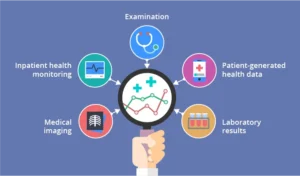
Legacy EHR sustainment services exist for one reason: your organization is not ready to replace its current EHR system — and the risks of leaving it unmanaged are growing every single day. If you are a hospital, health system, or federal healthcare facility still operating on an aging EHR platform, this post is written directly for you.
Running a legacy EHR without a structured sustainment plan is not a neutral decision. It is an active choice to carry security vulnerabilities, compliance exposure, and operational risk — quietly, in the background, until something breaks. The question is not whether your legacy EHR will create problems. The question is whether you are managing those problems proactively or waiting to react.
Zaamaa Consulting provides legacy EHR sustainment services for healthcare organizations that need their current systems stabilized, secured, and actively managed — whether you plan to stay on the platform for six more months or six more years.
The Real Risks of Running a Legacy EHR Without Sustainment Services
Before we talk about solutions, let’s be direct about what is at stake. Healthcare leaders managing legacy EHR environments without proper support face four categories of risk that compound over time:
1. Security Vulnerabilities That Grow Every Month
Legacy EHR platforms running on outdated operating systems or deprecated middleware create attack surfaces that modern cybersecurity frameworks struggle to defend. According to the HHS Office for Civil Rights, healthcare organizations remain the most targeted sector for ransomware attacks in the United States. An aging, unsupported EHR environment is one of the highest-risk entry points in your organization.
An unpatched legacy EHR is not just an IT problem — it is a patient safety risk and a regulatory liability. Every month without active patch management widens the exposure.
2. Compliance Gaps That Accumulate Silently
CMS and ONC requirements around interoperability, information blocking, and audit logging continue to evolve. The ONC’s information blocking rules apply regardless of how old your EHR is. Legacy systems that are no longer receiving vendor updates frequently fall out of compliance without anyone on your team realizing it until an audit surfaces the problem.
3. Operational Degradation That Happens Gradually
Interfaces stop working reliably. Reports generate incorrect data. System response times slow down. Staff build undocumented workarounds that introduce data integrity issues. By the time leadership notices, the damage is already significant and recovery is expensive. Without active legacy EHR sustainment, this degradation is not a possibility — it is a certainty.
4. Loss of Institutional Knowledge
The analysts and IT staff who built your legacy system’s configuration will not stay forever. When they leave, they take years of undocumented knowledge with them. Without a formal legacy EHR sustainment program that captures and maintains that knowledge, your organization becomes dangerously dependent on a shrinking group of people who understand how the system actually works.
What Legacy EHR Sustainment Services Actually Cover
Structured legacy EHR sustainment services are not simply “keeping the lights on.” A well-designed sustainment program is an active, managed service that addresses system health across eight distinct areas:
- Issue Resolution & Ticket Management: Prioritizing and resolving the backlog of open system issues before they escalate into clinical or operational incidents.
- Patch Management & Security Updates: Applying available patches within the constraints of your legacy environment to reduce exposure and maintain stability.
- Interface Monitoring & Maintenance: Actively monitoring and resolving failures between your EHR and connected systems — lab, pharmacy, radiology, billing — before they disrupt care delivery.
- System Performance Monitoring: Tracking uptime, response times, and performance degradation indicators so issues are caught early.
- Downtime Procedure Maintenance: Keeping downtime procedures current, tested, and accessible so your staff can respond safely to any outage.
- User Support & Super-User Programs: Providing ongoing EHR support and maintaining the internal super-user network that handles day-to-day issue resolution.
- Documentation & Knowledge Management: Capturing system configuration, workflow guides, and institutional knowledge so your organization is not dependent on any single person.
- Regulatory & Compliance Monitoring: Identifying configuration gaps that create compliance risk as requirements continue to evolve.
A well-managed sustainment program does not just reduce risk. It extends the operational life of your legacy EHR and gives your organization the runway to plan a future transition on your terms.
Sustain or Replace? A Decision Framework for Legacy EHR Leaders
This is the question every healthcare leader with an aging EHR faces. The honest answer depends on your specific situation. Use this framework to evaluate where your organization stands right now:
| Your Situation | Recommendation |
| Vendor still providing limited support; system is stable | Sustain & Optimize |
| Replacement budget not available in next 12-24 months | Sustain — build a transition plan |
| Mid-merger or organizational restructuring underway | Sustain until governance is stable |
| Vendor has announced end-of-life within 18 months | Begin replacement planning now |
| System failing ONC/CMS interoperability compliance | Replace — compliance risk is immediate |
| Security patches no longer available from vendor | Replace — do not wait |
| Clinician burnout tied directly to EHR workflow failures | Optimize now; plan replacement in parallel |
| Managing multiple legacy EHRs across merged entities | Consolidation plan needed alongside sustainment |
Not sure where your organization falls? Zaamaa offers legacy EHR environment assessments that give you a clear, honest picture of your current risk exposure and a specific recommendation. Contact Zaamaa to schedule an assessment.
Related: If a replacement is on your roadmap, see how Zaamaa supports full New EHR Implementation
5 Signs Your Organization Needs Legacy EHR Sustainment Support Now
These are the warning signals healthcare IT leaders consistently report before situations turn critical. If any of these sound familiar, do not wait for the next budget cycle.
- Your open ticket backlog keeps growing and nothing gets resolved. A growing backlog of unresolved EHR issues is not a minor inconvenience. It is a compounding pile of clinical and operational risk. If your team lacks the bandwidth to work through it, outside legacy EHR sustainment support is needed now.
- You have interfaces that sometimes work and nobody knows why. Intermittent interface failures between your EHR and lab, pharmacy, or radiology systems are among the most dangerous conditions in a legacy environment. Data that sometimes does not flow is worse than data that never flows — because nobody knows when to trust it.
- Your EHR system documentation is years out of date. If the only people who understand your system configuration are the ones who built it years ago — and some of them have already left — your organization is one resignation away from a serious knowledge crisis.
- Clinicians are reporting frequent slowdowns or unexpected downtime. Performance degradation in a legacy EHR builds gradually. By the time clinicians are complaining loudly, the underlying issues have usually been developing for months.
- You haven’t had a formal system review in over 12 months. If nobody has formally reviewed your legacy EHR’s security posture, interface health, and compliance alignment in the past year, you do not know what you do not know. In healthcare IT, that is a genuinely dangerous position.
If three or more of these apply to your organization, your legacy EHR environment needs active sustainment support now — not at your next planning meeting.
What Legacy EHR Sustainment Services Look Like With Zaamaa
Healthcare leaders sometimes assume that bringing in outside support means handing over control of their environment. That is not how a good sustainment engagement works. Here is exactly what partnering with Zaamaa Consulting looks like step by step:
Step 1: Discovery & Legacy EHR Environment Assessment
We begin by fully understanding your environment — system architecture, interface inventory, open ticket backlog, vendor support status, documentation gaps, and compliance posture. You get a clear picture of your actual risk before any remediation work begins.
Step 2: Prioritized Remediation Plan
Based on the assessment, we build a work plan that addresses the highest-risk items first — security gaps, interface failures, critical open tickets — and moves through optimization and documentation at a pace your team can manage alongside daily operations.
Step 3: Ongoing Managed Legacy EHR Sustainment
Once immediate risks are addressed, we transition to an ongoing managed sustainment model — actively managing your EHR environment, resolving issues as they arise, monitoring system health, and keeping your leadership informed. This phase also connects your sustainment work to your broader EHR optimization and future planning.
Step 4: Knowledge Transfer & Documentation
Throughout the engagement, we capture and document everything — system configuration, workflow guides, interface maps, and known issue resolutions. When the engagement ends, that knowledge stays with your organization permanently.
Step 5: Transition Planning Support
If and when your organization is ready to move to a new EHR, Zaamaa’s sustainment team already knows your environment inside and out. That makes the new EHR implementation planning process significantly faster and better informed.
IMAGE PLACEHOLDER
File: zaamaa-healthcare-it-consultant-ehr-support.jpg
Alt text: “legacy EHR sustainment services consultant supporting hospital IT team”
Caption: Zaamaa’s sustainment team works alongside your internal staff — not instead of them.
Also see: How Zaamaa’s System Integration expertise keeps your legacy EHR connected to the rest of your technology ecosystem — zaamaa.consulting/system-integration/
Who Zaamaa’s Legacy EHR Sustainment Services Are Built For
These services are designed for healthcare organizations in specific situations. You may be the right fit if:
- You are a community hospital or regional health system on an aging Epic, Oracle Health, MEDITECH, or Sunquest platform with limited vendor support remaining
- You are a multi-site organization managing multiple legacy EHR environments after a merger or acquisition
- You have delayed an EHR replacement decision and need to stabilize your current system while that decision is made deliberately
- You operate a federal or government healthcare facility required to maintain a legacy system for compliance or contractual continuity reasons
- You have experienced staff turnover in your healthcare IT department and need experienced EHR analysts to fill critical knowledge gaps quickly
- You need Healthcare IT staffing support to augment your internal team without committing to full-time hires
Zaamaa is SAM.gov registered (UEI: M3ZWHM12TX55) and fully eligible to support U.S. federal healthcare IT contracts, including legacy EHR sustainment for VA, DoD, and federal health facilities.